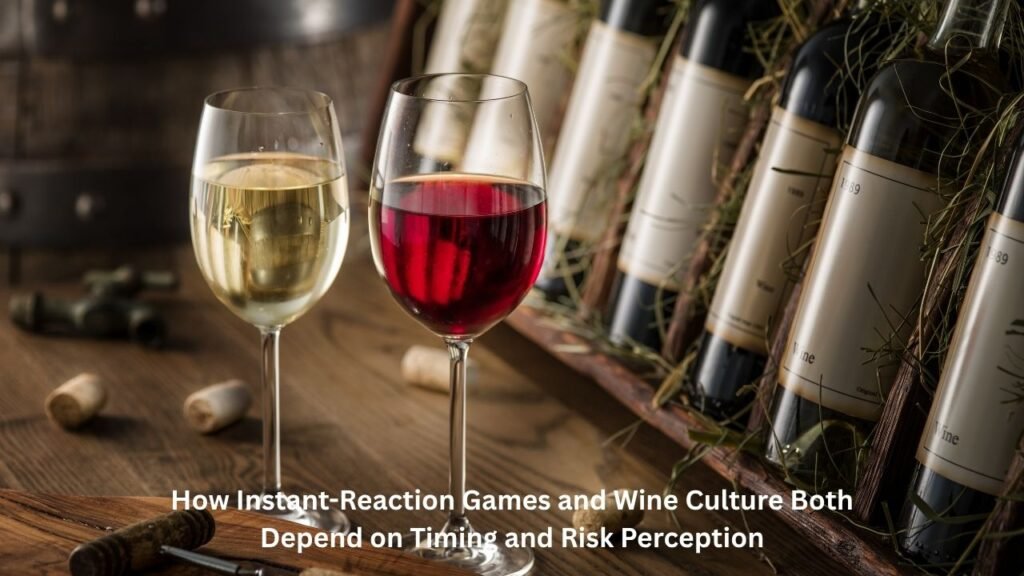

Luxury spending often appears irrational from the outside because emotional value influences decisions almost as strongly as measurable utility. Someone purchasing a bottle of Château Margaux 2015, Dom Pérignon Vintage, or Sassicaia rarely evaluates the experience only through objective price comparison. Atmosphere, anticipation, rarity, timing, and emotional association all shape the perceived value of the purchase.
Interestingly, fast-paced digital entertainment systems rely on surprisingly similar psychological mechanics. Instant-reaction games, particularly those built around rising tension and quick decision-making, create emotional environments where timing becomes central to user behaviour. The emotional reward often comes less from the final result itself and more from navigating uncertainty successfully.
Why Timing Shapes Perceived Value
One reason premium wine markets function differently from ordinary consumer goods is that value fluctuates emotionally as well as financially. A bottle served during a meaningful celebration or opened at the perfect maturation stage feels psychologically different from the same bottle consumed randomly years earlier.
This relationship between timing and emotional perception also appears inside fast-reaction gaming systems. Someone exploring a jetx apk environment quickly notices how the interface builds tension gradually through escalating multipliers, short-session pacing, and visible timing pressure rather than relying on long-form gameplay structure. The experience depends heavily on anticipation management because users continuously evaluate whether to exit early or remain engaged slightly longer. That emotional calculation resembles luxury-purchase behaviour more closely than many people expect.
In both cases, anticipation itself becomes part of the experience being consumed.
Why Scarcity Increases Emotional Attachment
Wine markets historically relied on scarcity as a major pricing factor. Limited vineyard production, regional climate variation, and vintage-specific quality differences all contribute to perceived exclusivity. A Burgundy Grand Cru from a difficult harvest year may carry stronger emotional significance precisely because availability remains limited.
Digital entertainment systems increasingly use similar behavioural logic through:
- limited-time events;
- fast-session volatility;
- escalating pressure mechanics;
- real-time interaction pacing.
Importantly, perceived scarcity often matters as much psychologically as actual scarcity. The feeling that an opportunity may disappear quickly changes decision-making behaviour significantly.
How Expertise Changes Risk Perception
Experienced wine buyers rarely evaluate bottles randomly. They consider tannin structure, ageing potential, vineyard reputation, storage conditions, and vintage reports before purchasing expensive labels.
Similarly, experienced users inside fast-paced digital entertainment systems often develop behavioural discipline around timing, pacing, and emotional control. New participants usually react impulsively to short-term momentum, while experienced users pay closer attention to consistency and psychological rhythm.
This difference explains why expertise often reduces emotional volatility in both environments.
Why Emotional Atmosphere Influences Spending Decisions
Luxury purchases rarely happen inside emotionally neutral environments. Context shapes perceived value continuously.
Why Environment Changes Behaviour
A bottle of Barolo served during a carefully paced dinner creates a completely different psychological experience from drinking the same wine casually without context. Lighting, conversation quality, pacing of the meal, and emotional atmosphere all influence perceived satisfaction.
Digital entertainment platforms operate similarly. Fast-response games rely heavily on visual pacing, sound design, countdown structures, and tension escalation to shape emotional immersion.
This is one reason interface design matters so heavily across both luxury and entertainment industries. Small environmental details influence behavioural decisions far more than users consciously realize.
How Short-Term Emotion Overrides Rational Comparison
Many consumers assume purchasing decisions happen rationally, yet behavioural economics repeatedly demonstrates the opposite. Emotional momentum frequently overrides analytical comparison once anticipation becomes strong enough.
This effect appears during:
- luxury-auction bidding;
- limited wine releases;
- high-pressure entertainment sessions;
- emotionally charged purchasing environments.
Users often justify decisions logically afterward even when the original motivation was largely emotional.
Why Behavioural Awareness Improves Decision-Making
Understanding emotional timing does not necessarily reduce enjoyment. In many cases, awareness actually improves the quality of the experience because users become more conscious of what influences their reactions.
Experienced wine collectors, for example, often enjoy bottles more slowly because they understand how serving temperature, oxygen exposure, and pacing affect perception. Similarly, users familiar with fast-paced entertainment systems usually make calmer decisions because they recognize how tension mechanics influence behaviour.
This awareness creates greater intentionality rather than automatic reaction.
Conclusion
Wine culture and instant-reaction entertainment systems rely on surprisingly similar psychological foundations. Both depend heavily on timing, emotional anticipation, perceived scarcity, and behavioural decision-making under uncertainty.
The strongest experiences rarely come purely from price or technical structure alone. They emerge from how effectively atmosphere, pacing, and emotional tension interact with user expectations. As digital entertainment continues evolving, these behavioural similarities between luxury consumption and interactive gaming will likely become even more visible.